A safety net for teens that isn’t a tracker
By Jim Hankins
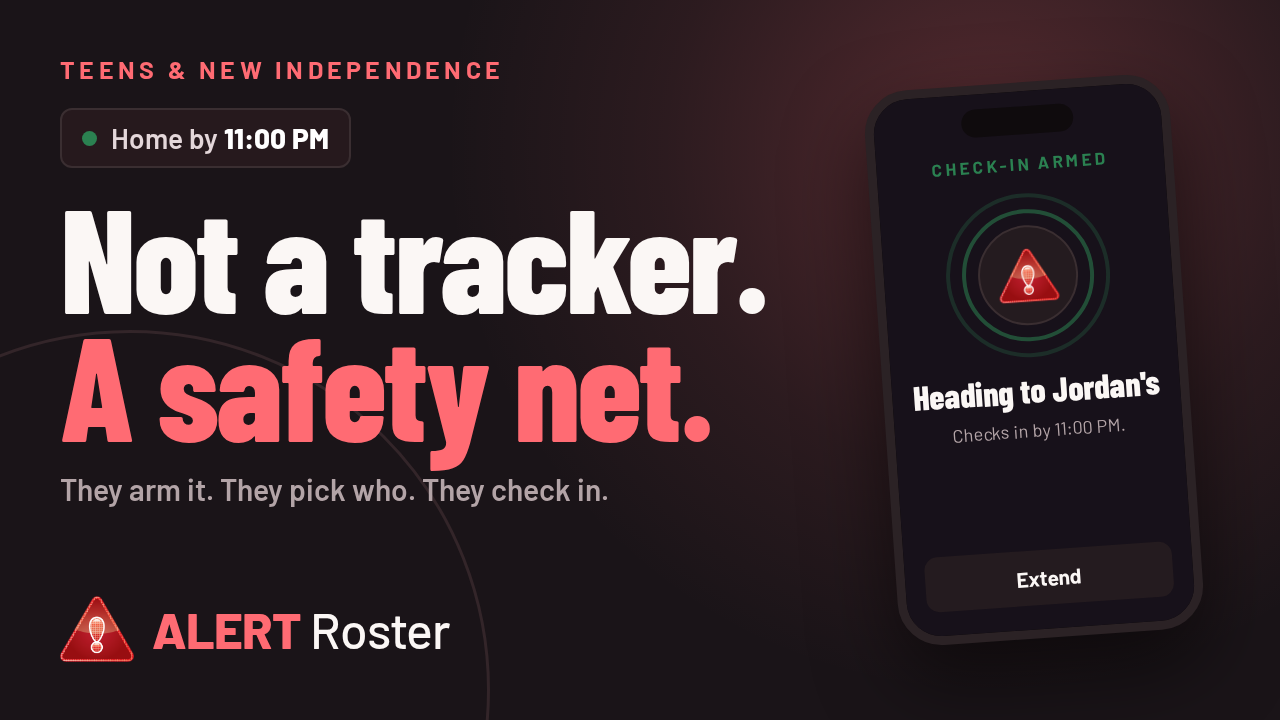
New independence arrives all at once. The first car, the first night out that doesn’t end at somebody’s parents’ house, the first weekend away. And the tools most families reach for are precisely the ones teenagers learn to work around.
Why location sharing quietly fails
Constant location sharing asks a young adult to accept permanent visibility as the price of going out. Some accept it. Many discover airplane mode, a second phone, or simply leaving the thing at a friend’s house.
Once that happens the family is worse off than before, because the dot on the map is now actively misleading. A tool that gets defeated is not a safety tool.
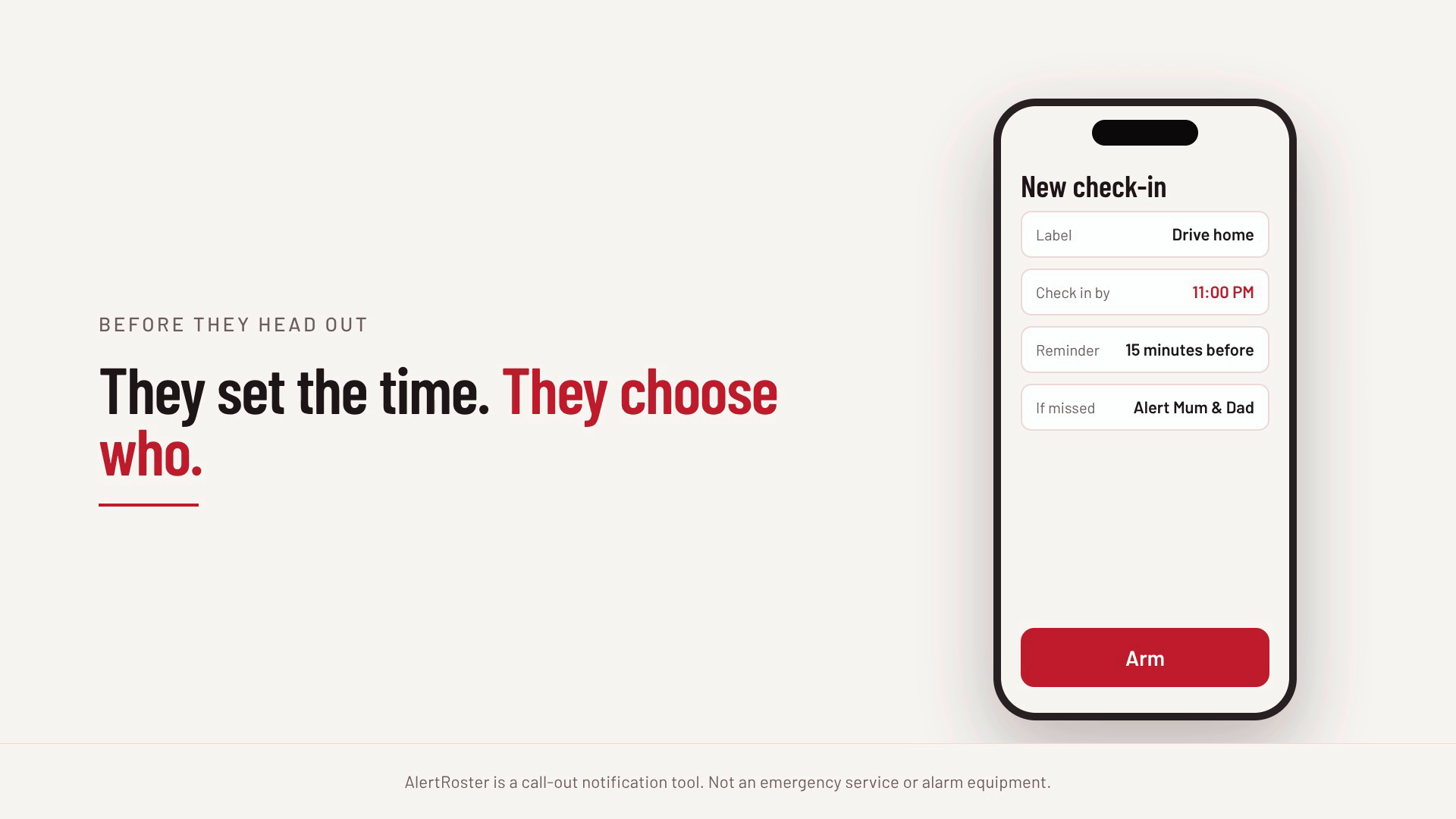
They arm it themselves, set the window, and who hears about it.
Give them the controls
A check-in works the other way round. The teenager arms it. They pick the window and the people. It is their plan, not a condition imposed on them, and that difference is why it survives contact with an actual seventeen-year-old.
Nothing is shared while it is running. There is no trail, no history, no map of where they were on Tuesday.
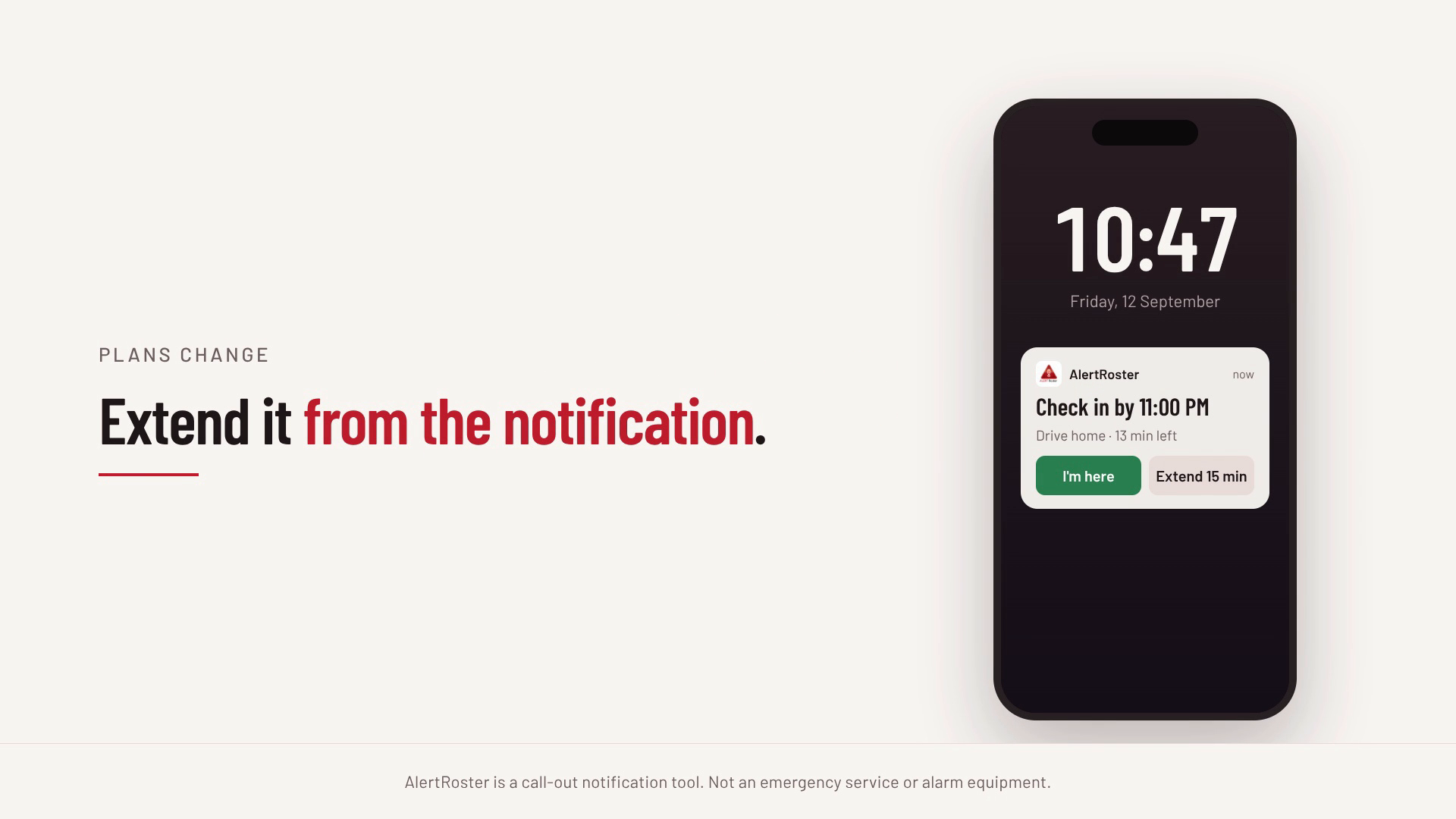
Running late is ordinary. Extend, and carry on.
Plans change constantly, and that’s fine
Teenage plans are fluid by nature. Extending a check-in is expected, not suspicious, and it costs one tap, which is the only way the habit lasts past the second week.
The system should never punish someone for the entirely normal act of staying out longer than planned.
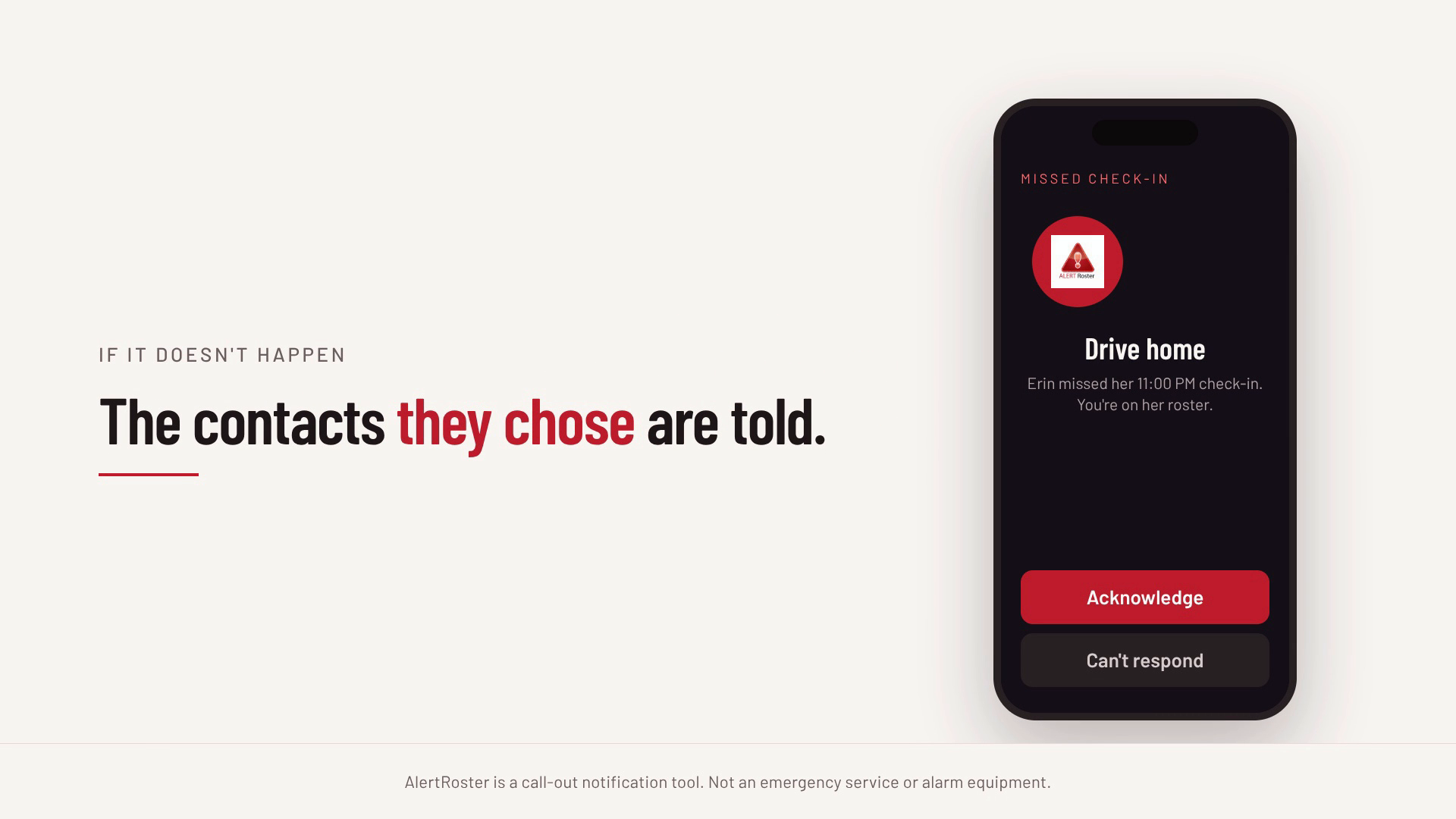
Missed: the contacts they chose are told.
The one moment it speaks
Miss the check-in, and the contacts they chose are told. That is the only moment anything happens, and everyone knew in advance that it would.
For a lot of families this lands better than tracking ever did, because it is a safety net rather than a leash and because the teenager helped build it.
What a teenager’s alert roster looks like
An alert roster is the ordered list of people a missed check-in reaches. Because the teenager builds it themselves, it tends to look different from the one a parent would have written.
Often a friend sits at the top and a parent second. That is worth allowing. A roster the young person actually believes in is one they keep armed, and a friend who can answer in thirty seconds is genuinely more useful at the first step than a parent asleep upstairs.
What an alert roster is, and where the idea started.
Try it
AlertRoster is at alertroster.com. Setting up a check-in takes about a minute.
AlertRoster is a call-out notification and escalation tool. It is not an emergency service and does not contact one on your behalf. It is not a fire alarm, a security alarm, or an alarm monitoring service, and it holds no life-safety certification. It should not be the only way a call-out can reach your people.
About the author
Jim Hankins is the founder and CEO of Cloud Bedrock, LLC and the developer of AlertRoster, which he first launched in 2009. A US Army combat veteran and a 42-year veteran of IT and software development, he has spent much of his career building emergency communications platforms including as CTO of GEOS, the international emergency response coordination service acquired by Garmin in January 2021, and two successful exits. He has also volunteered in search and rescue, supporting the search for missing children.