Showing alone: a safety plan for agents
By Jim Hankins
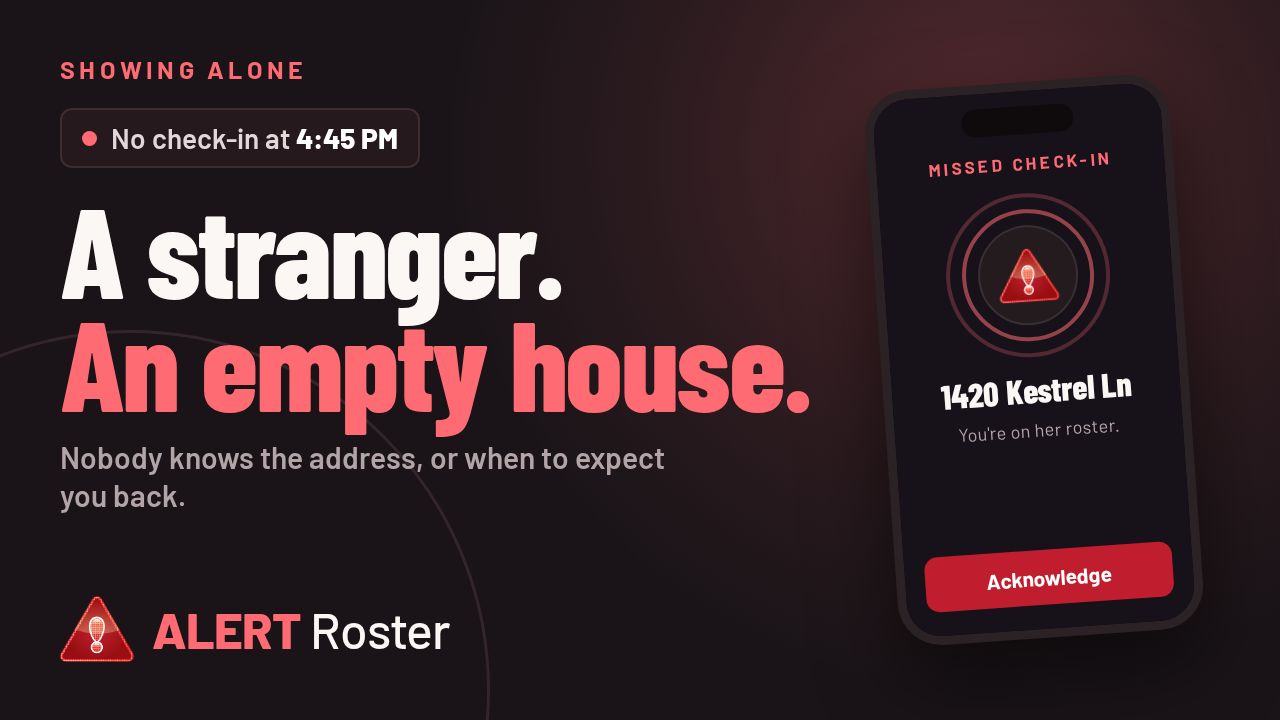
Meeting someone you have never met, alone, in an empty building, is not an edge case in this profession. It is the job, several times a week, often after dark, frequently somewhere with no neighbors to speak of.
The risk is structural, not occasional
Showings, open houses, vacant listings and lockbox visits all share the same shape: one person, one unfamiliar property, one stranger, and no particular reason for anyone else to know the appointment is happening.
Brokerages have policies about this. What they mostly lack is a mechanism, something that notices when an agent doesn’t come back.
The calendar is not a safety system
An appointment in a shared calendar records that a showing was scheduled. It records nothing at all about whether it ended.
That gap between “the appointment existed” and “the agent is accounted for” is where the whole problem lives.
Running over is normal. Extend and carry on.
Arm it at the door
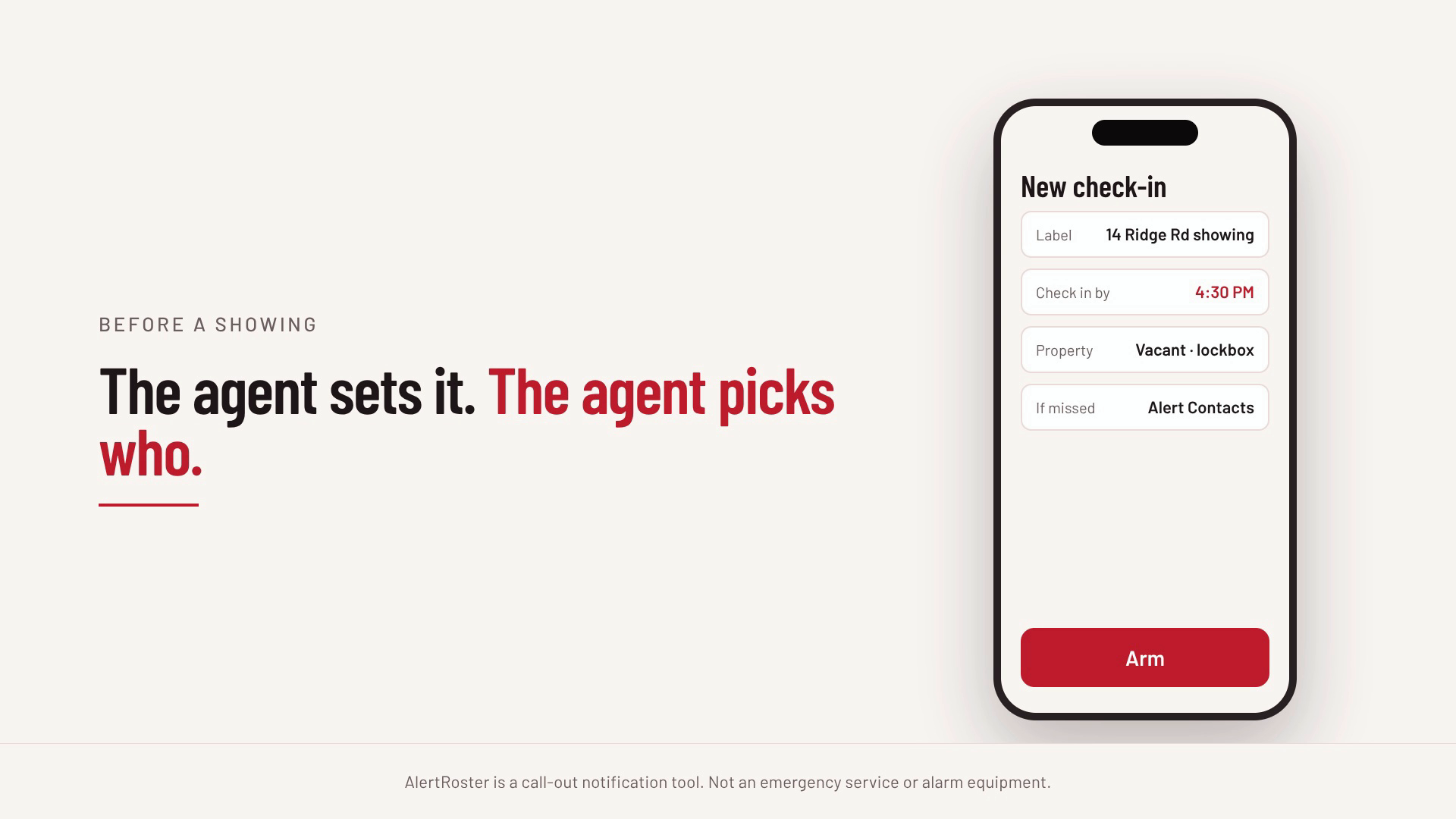
Before the showing: the address, the expected duration, and who should be told. It takes less time than unlocking the box.
Overrunning is completely normal, and extending is one tap. A system that treats a chatty buyer as an emergency will be uninstalled by Friday.
Missed: the roster is told, with the address.
Nobody else arms it, and nobody watches it
The agent owns the check-in. A brokerage does not arm it on their behalf and cannot watch it, which keeps it a safety tool rather than a management one.
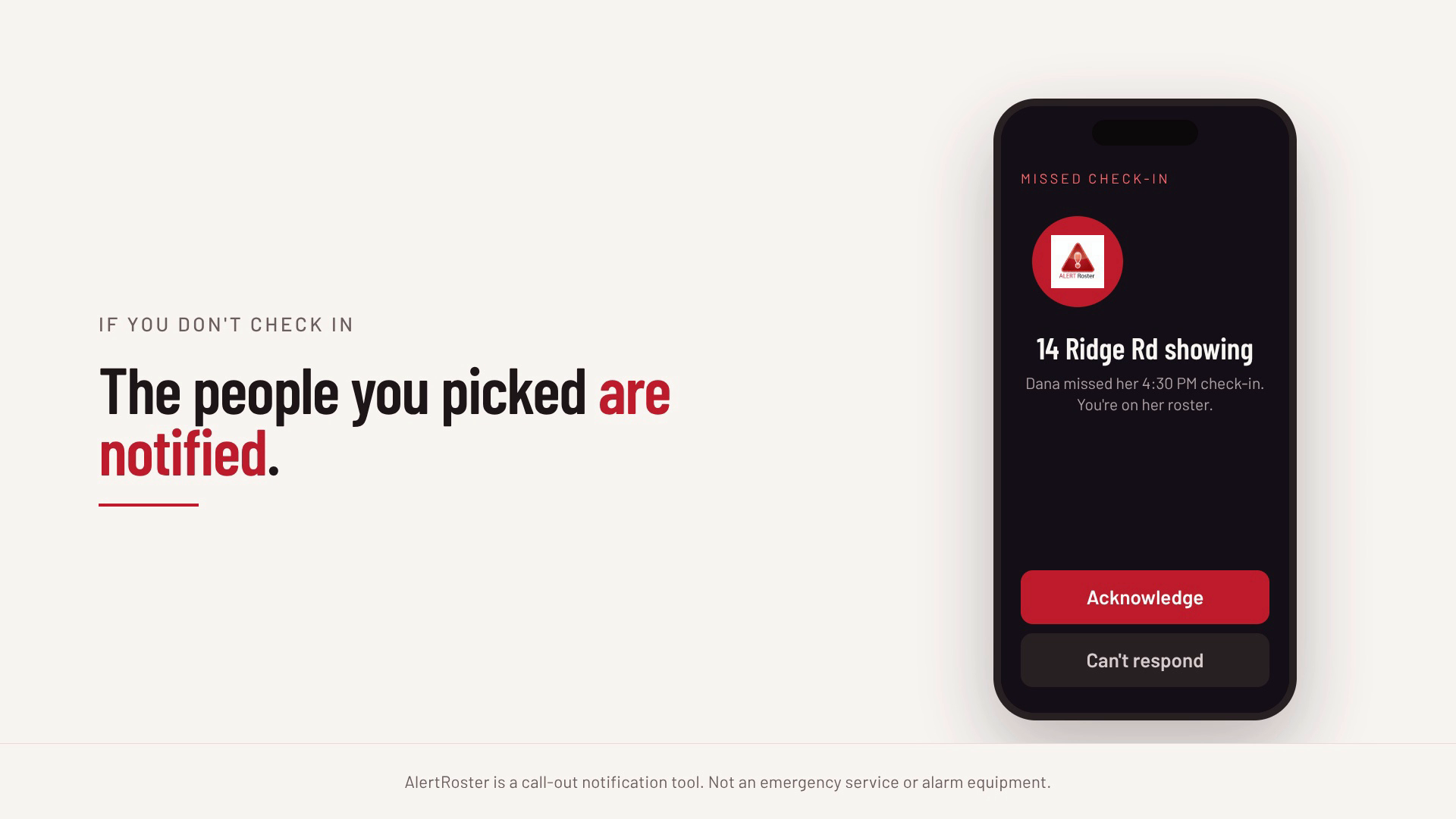
If the check-in is missed, the roster the agent chose is told, with the address they entered when they armed it, so the response starts with somewhere to go.
The brokerage alert roster
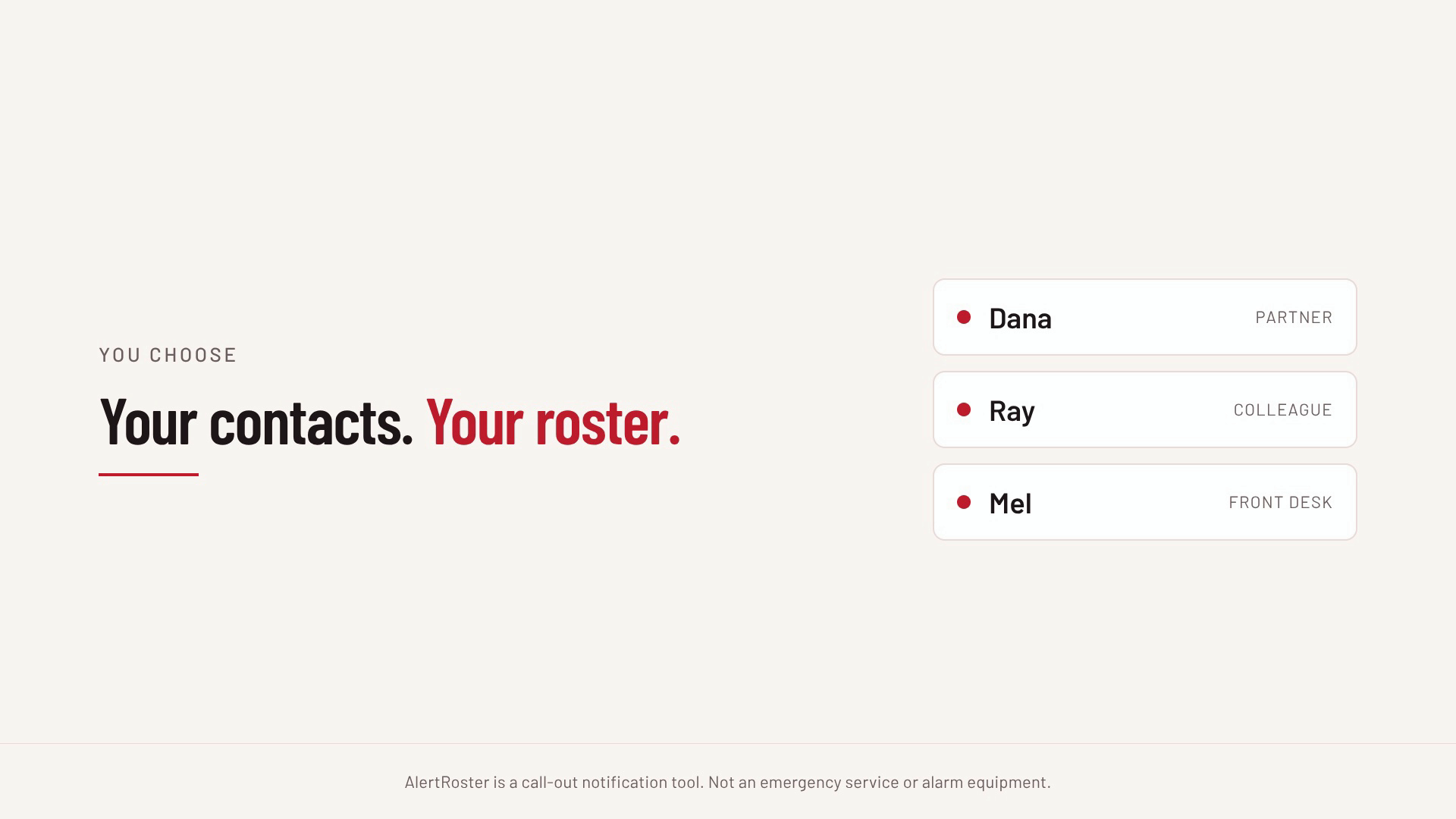
An alert roster is the ordered list of people a missed check-in reaches. In a brokerage that usually means a colleague, then a manager, then a partner at home.
The agent decides the order, not the office. A roster imposed from above tends to route the first call to whoever is least able to drive to the property, which is precisely backwards.
What an alert roster is and where it originated.
Try it
AlertRoster is at alertroster.com. Setting up a check-in takes about a minute.

AlertRoster is a call-out notification and escalation tool. It is not an emergency service and does not contact one on your behalf. It is not a fire alarm, a security alarm, or an alarm monitoring service, and it holds no life-safety certification. It should not be the only way a call-out can reach your people.
About the author
Jim Hankins is the founder and CEO of Cloud Bedrock, LLC and the developer of AlertRoster, which he first launched in 2009. A US Army combat veteran and a 42-year veteran of IT and software development, he has spent much of his career building emergency communications platforms including as CTO of GEOS, the international emergency response coordination service acquired by Garmin in January 2021, and two successful exits. He has also volunteered in search and rescue, supporting the search for missing children.