Living independently, with a safety net underneath
By Jim Hankins
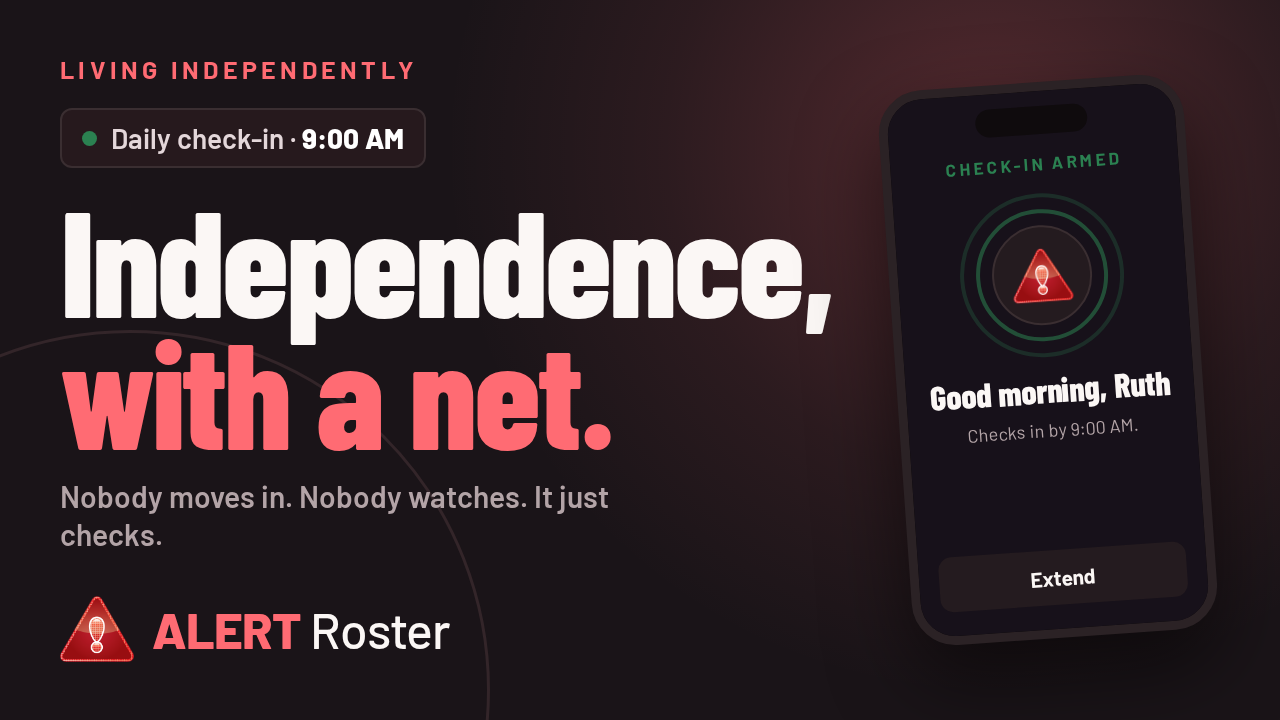
Independence is not usually lost in one decision. It is negotiated away in small pieces, often in response to a worry that nobody has found a proportionate answer to.
The real question
The question facing most families is not whether a parent can manage day to day. Generally they can, and better than anyone gives them credit for.
The question is what happens on the one morning they can’t, and how long it takes anybody to find out. That is a much narrower problem, and a much easier one to solve.
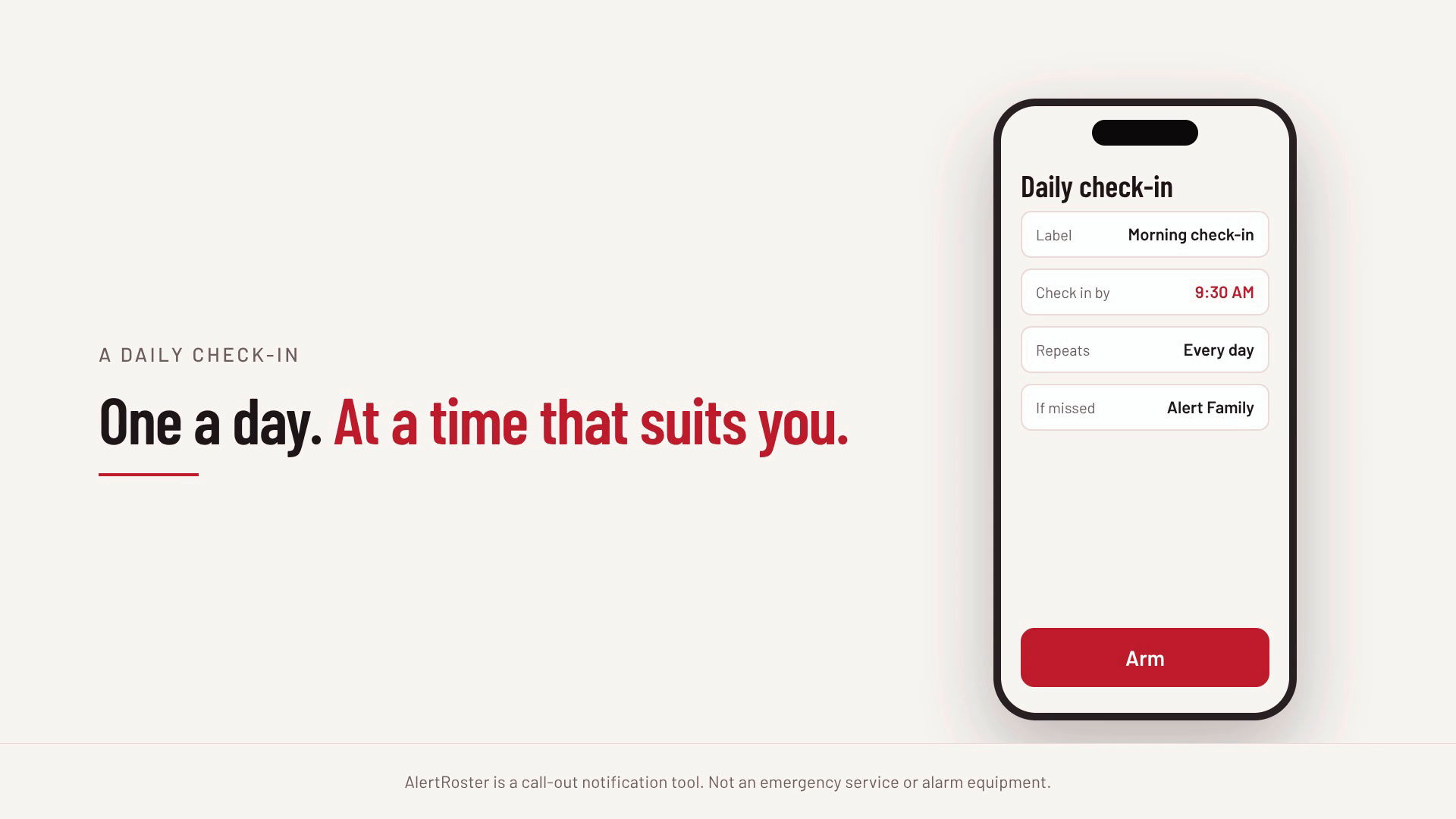
A daily window, set to suit the household.
Answers that cost too much
The usual responses are blunt. Move in, or have someone move in. Install cameras. Call every single morning and build a ritual that both sides come to resent.
Each of these trades a large amount of autonomy for a small amount of reassurance. A daily check-in trades almost none.
Checked in. Nothing is sent, and the day carries on.
How a daily check-in works
A window each day, at a time that suits the household. Check in, and it closes. Nothing is sent, nobody is notified, and the day carries on.
Nobody moves in. Nobody watches. There is no camera, no map, and no record of anything except whether a check-in happened.
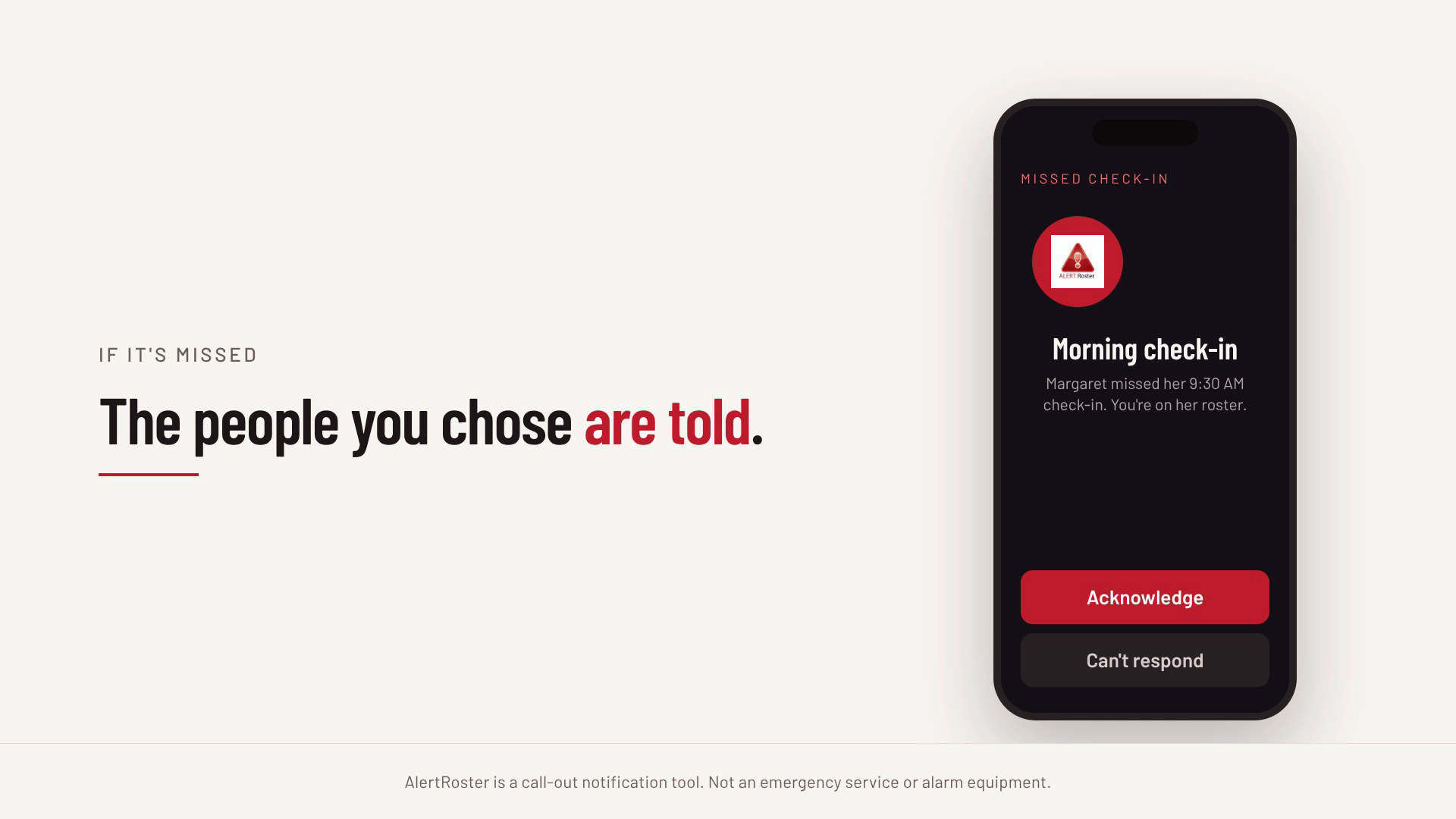
Missed: the people chosen in advance are told.
The morning it matters
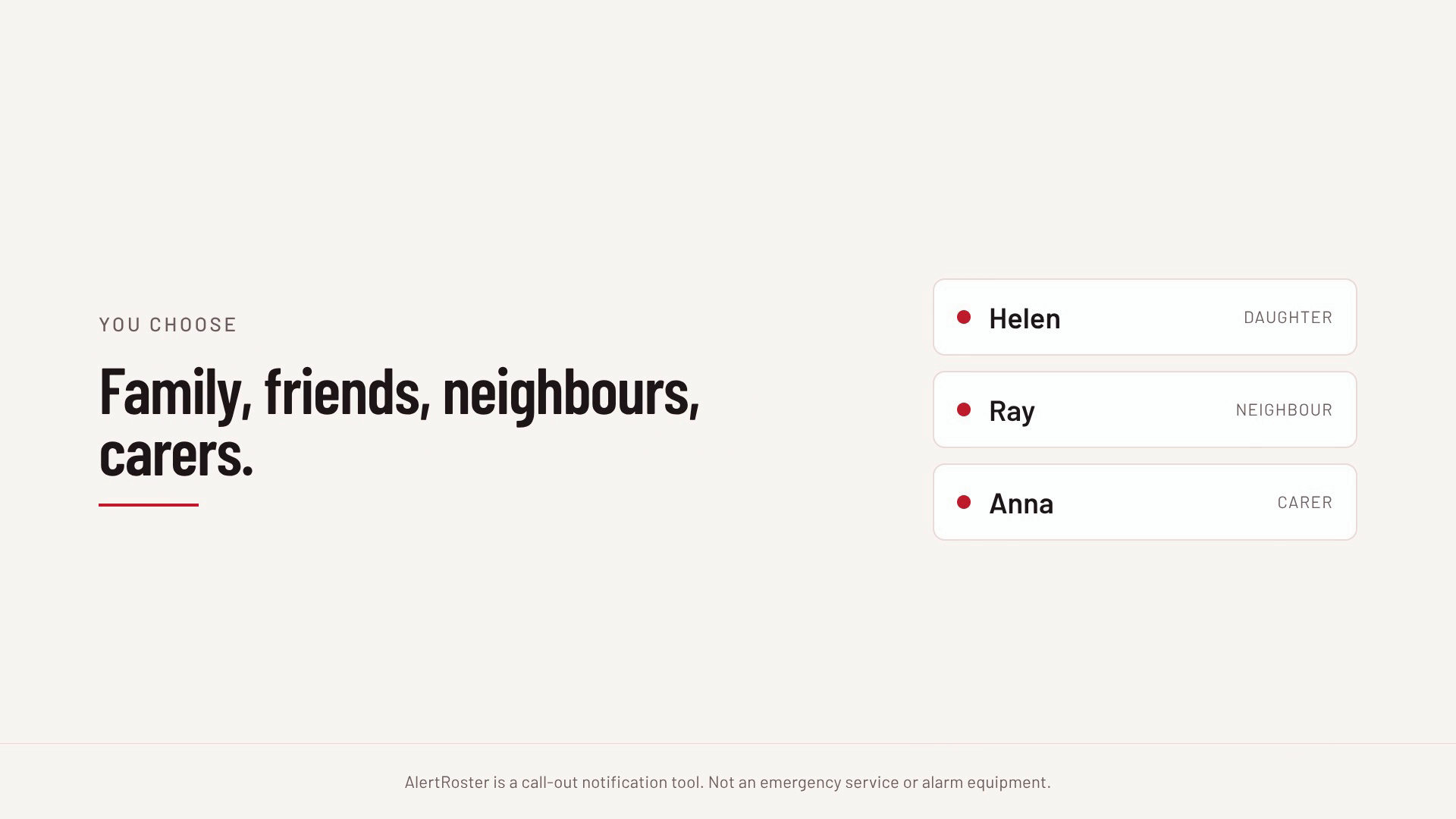
If the check-in doesn’t happen, the people on the roster are told. Family, a neighbor, whoever was chosen in advance.
For a lot of households this is the smallest intervention that answers the actual worry, which is why it tends to be the one everyone can live with.
Building the alert roster around the household
An alert roster is the ordered list of people a missed check-in reaches. For someone living independently, the order usually matters more than who is on it.
A neighbor two doors down is often the right first name, with family second. Family will want to be told; a neighbor can actually knock. A good roster reflects that difference rather than ranking by closeness of relationship.
The history of the alert roster, and what it was built to solve.
Try it
AlertRoster is at alertroster.com. Setting up a check-in takes about a minute.
AlertRoster is a call-out notification and escalation tool. It is not an emergency service and does not contact one on your behalf. It is not a fire alarm, a security alarm, or an alarm monitoring service, and it holds no life-safety certification. It should not be the only way a call-out can reach your people.
About the author
Jim Hankins is the founder and CEO of Cloud Bedrock, LLC and the developer of AlertRoster, which he first launched in 2009. A US Army combat veteran and a 42-year veteran of IT and software development, he has spent much of his career building emergency communications platforms including as CTO of GEOS, the international emergency response coordination service acquired by Garmin in January 2021, and two successful exits. He has also volunteered in search and rescue, supporting the search for missing children.