“I’ll just be a minute” the most dangerous sentence in the house
By Jim Hankins
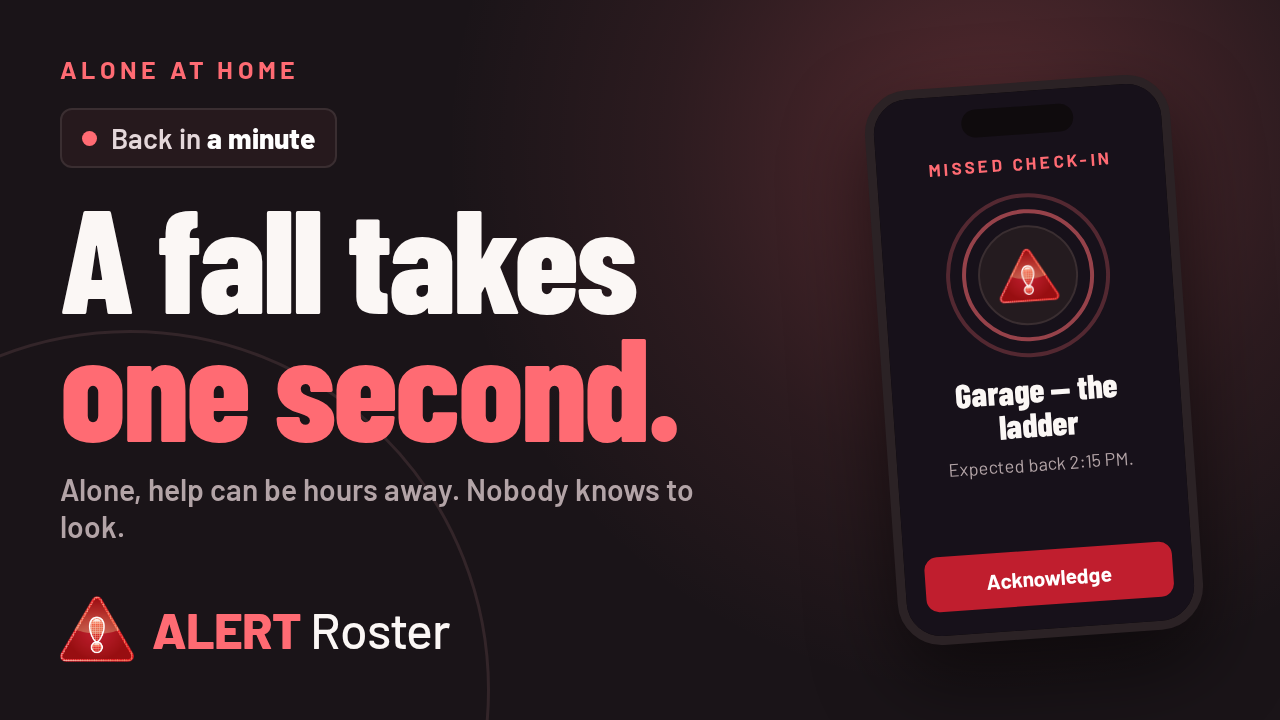
It is the ladder in the garage, the loft hatch, the crawlspace, the bulb that needs changing before anyone gets home. The job genuinely does take a minute. The problem has never been the job.
A second to fall, hours to be found
The arithmetic of working alone is brutally simple. The incident takes a second. Being discovered takes however long it is until somebody was already expecting you, and if nobody was expecting anything, that clock never starts.
This is the gap that matters, and it has nothing to do with how careful you are. Careful people fall off ladders. What changes the outcome is how quickly someone realizes.
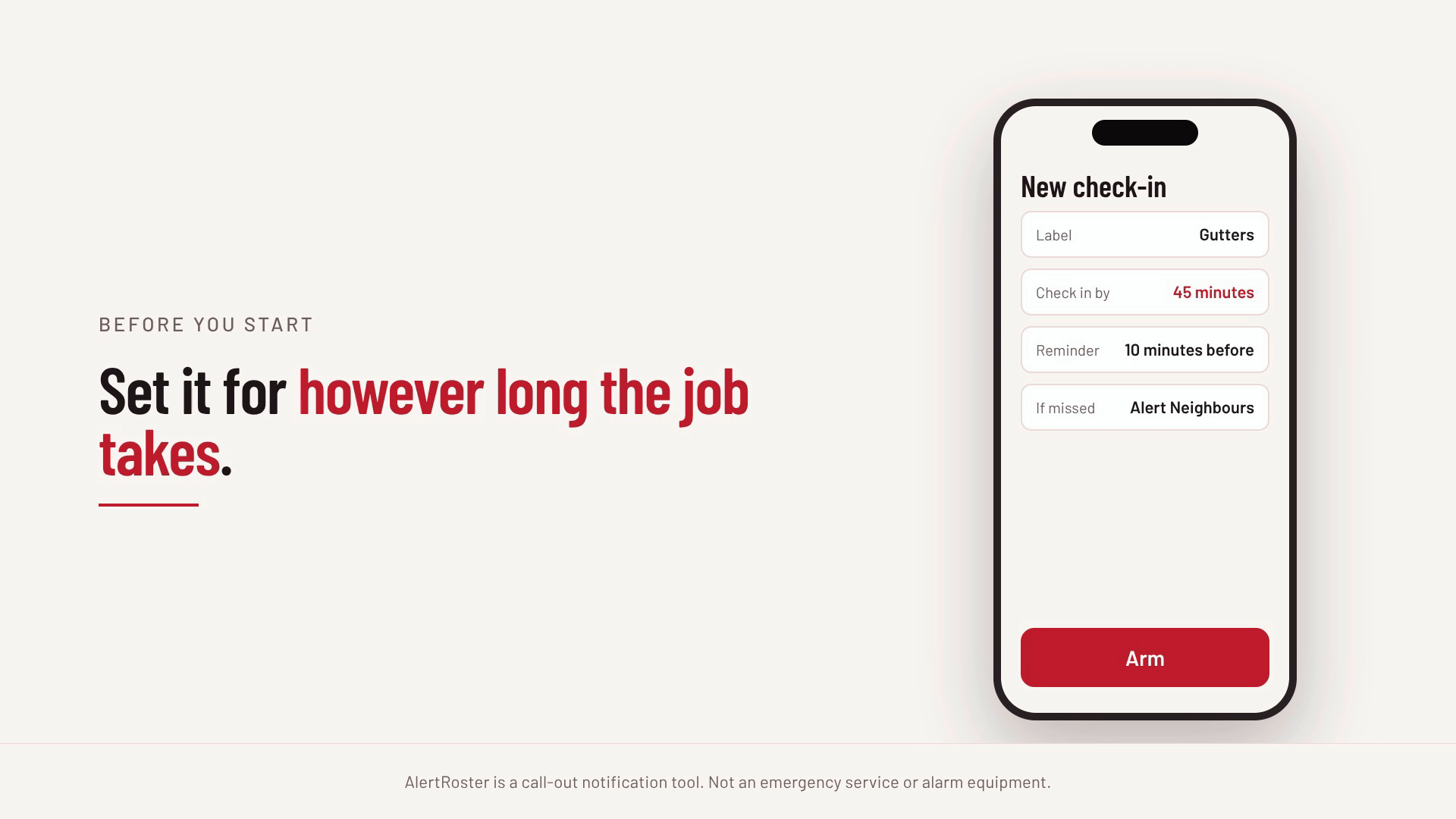
A window set before the job starts.
The five-minute job nobody knows about
Almost by definition, these are the tasks that don’t get announced. Telling someone you are about to change a lightbulb feels absurd, so nobody does it, so nobody knows to wonder.
A check-in is the announcement, reduced to something that takes less time than the job itself.
Running long is normal. Extend and carry on.
Set it before you climb
Before going up, set a window, twenty minutes, an hour, whatever the job honestly needs. Pick who should hear about it. Then do the work.
If it takes longer than expected, extend it. That is the ordinary outcome and it costs one tap.
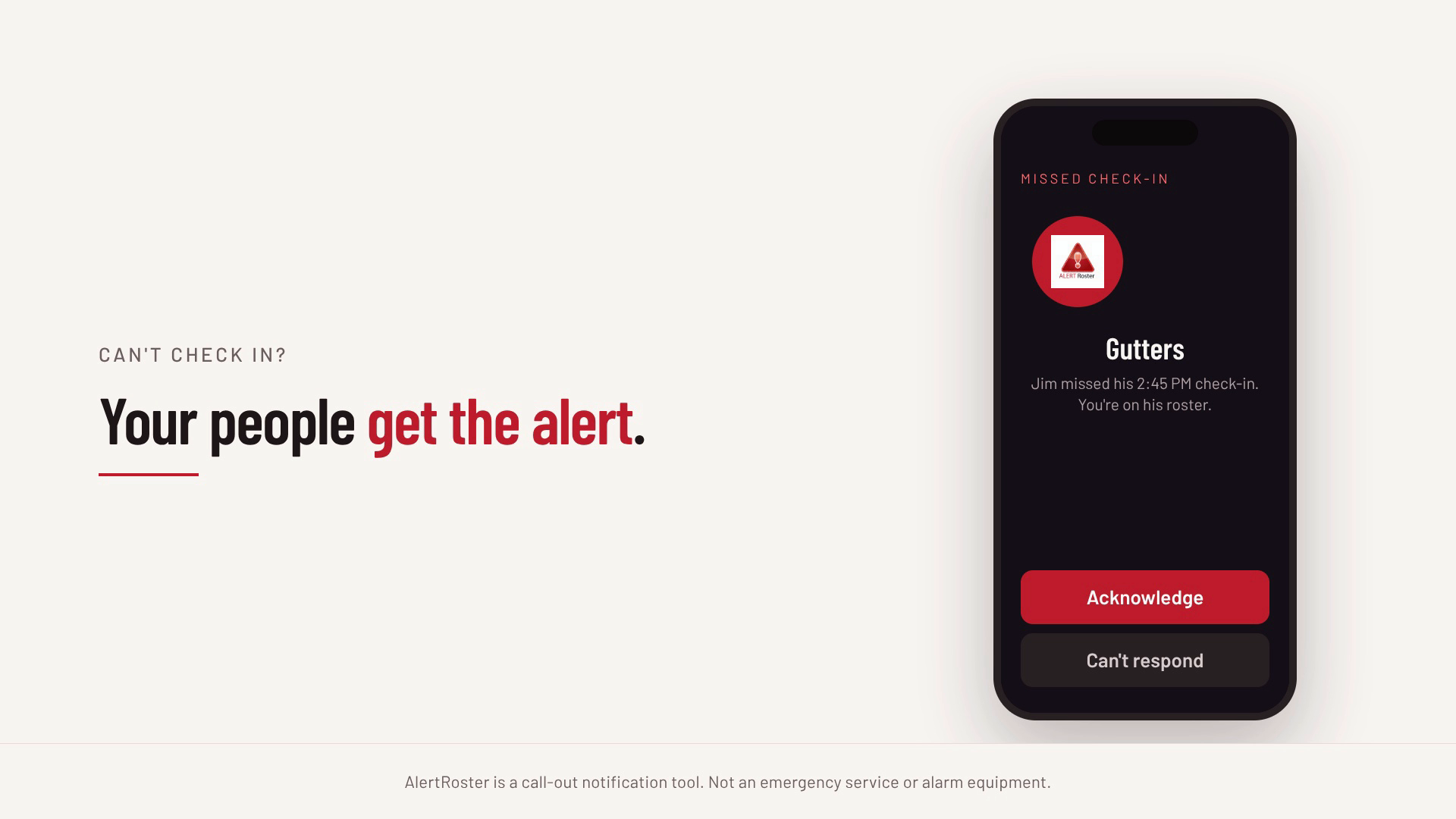
Missed: the roster is told, with the context that was set.
The part that does the work
Check in when you’re down and nothing happens at all. Miss it, and the people you chose are told, with the context you set when you armed it, so they know where to look rather than just that something is wrong.
Knowing where to look is most of the value. “Something’s wrong” starts a search. “He was in the garage on the ladder at two” ends one.
Keeping the alert roster short
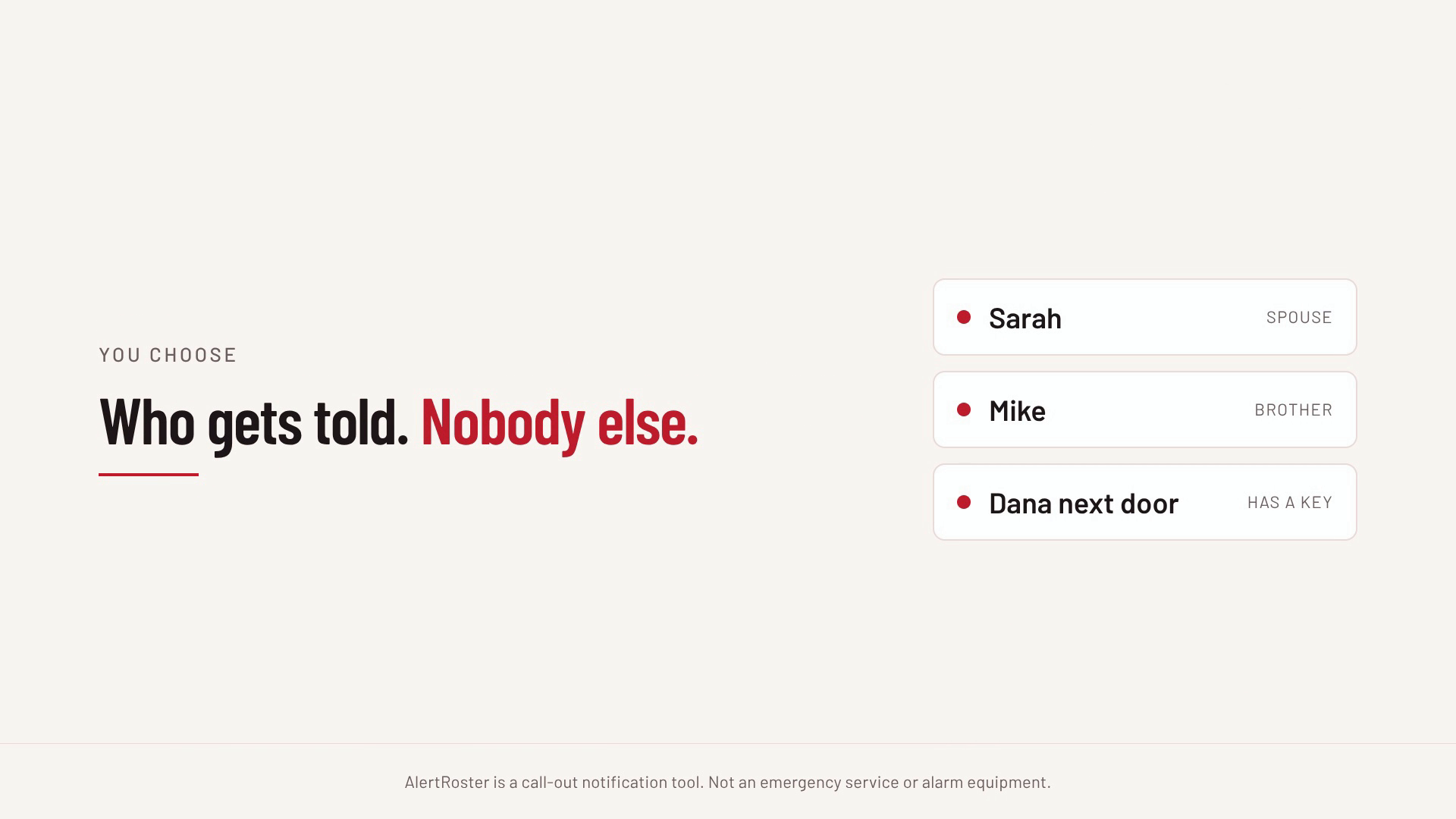
An alert roster is the list of people a call-out reaches, in order. For jobs around the house, the useful roster is usually one or two names: whoever is closest, and whoever has a key.
Distance beats seniority here. The person who can look in the garage in ten minutes is worth more on the roster than the person who would worry most.
A short history of the alert roster.
Try it
AlertRoster is at alertroster.com. Setting up a check-in takes about a minute.
AlertRoster is a call-out notification and escalation tool. It is not an emergency service and does not contact one on your behalf. It is not a fire alarm, a security alarm, or an alarm monitoring service, and it holds no life-safety certification. It should not be the only way a call-out can reach your people.
About the author
Jim Hankins is the founder and CEO of Cloud Bedrock, LLC and the developer of AlertRoster, which he first launched in 2009. A US Army combat veteran and a 42-year veteran of IT and software development, he has spent much of his career building emergency communications platforms including as CTO of GEOS, the international emergency response coordination service acquired by Garmin in January 2021, and two successful exits. He has also volunteered in search and rescue, supporting the search for missing children.