Dating safety: set it before the date begins
By Jim Hankins
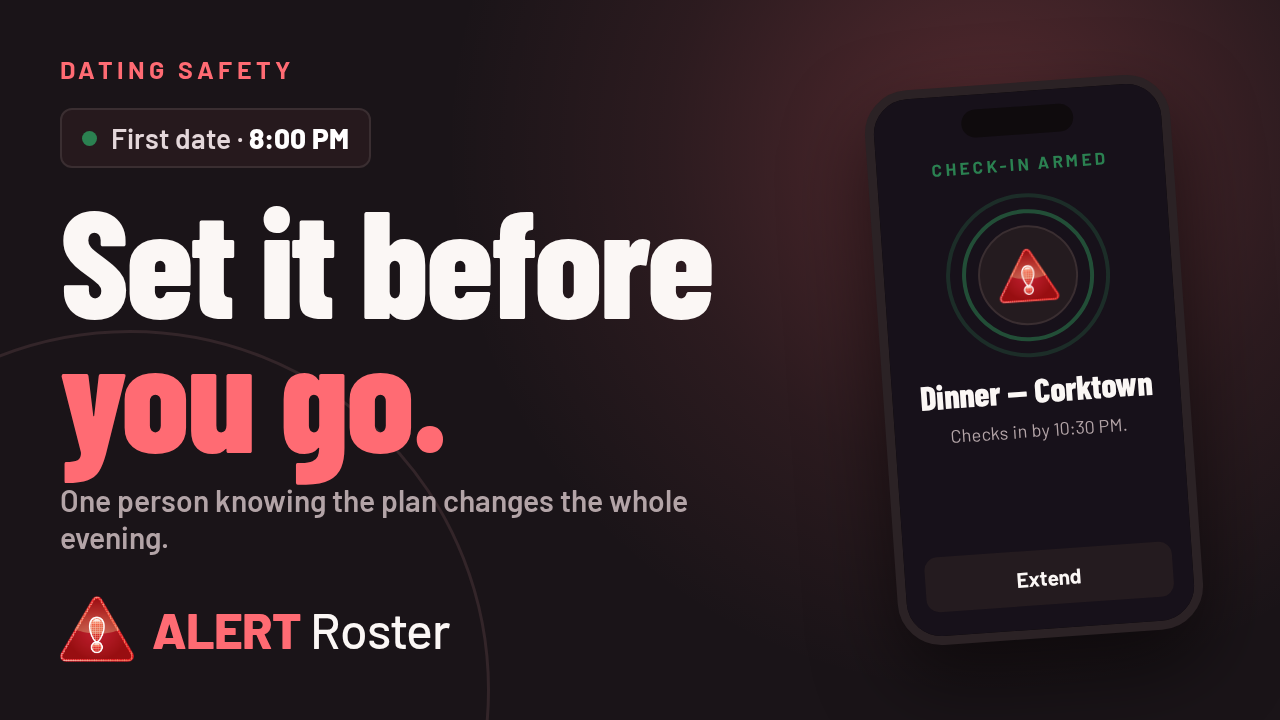
Meeting someone new goes well the overwhelming majority of the time. That is exactly why the precaution has to be cheap: anything that makes a good evening more awkward simply won’t get used.
The informal version already exists
Most people already do a version of this. A text to a friend with the name and the venue. A promise to message when home. A code word.
It works, right up until the friend falls asleep, or gets busy, or assumes the silence means the evening went well. The weak link was never the plan, it was relying on someone else to keep time.
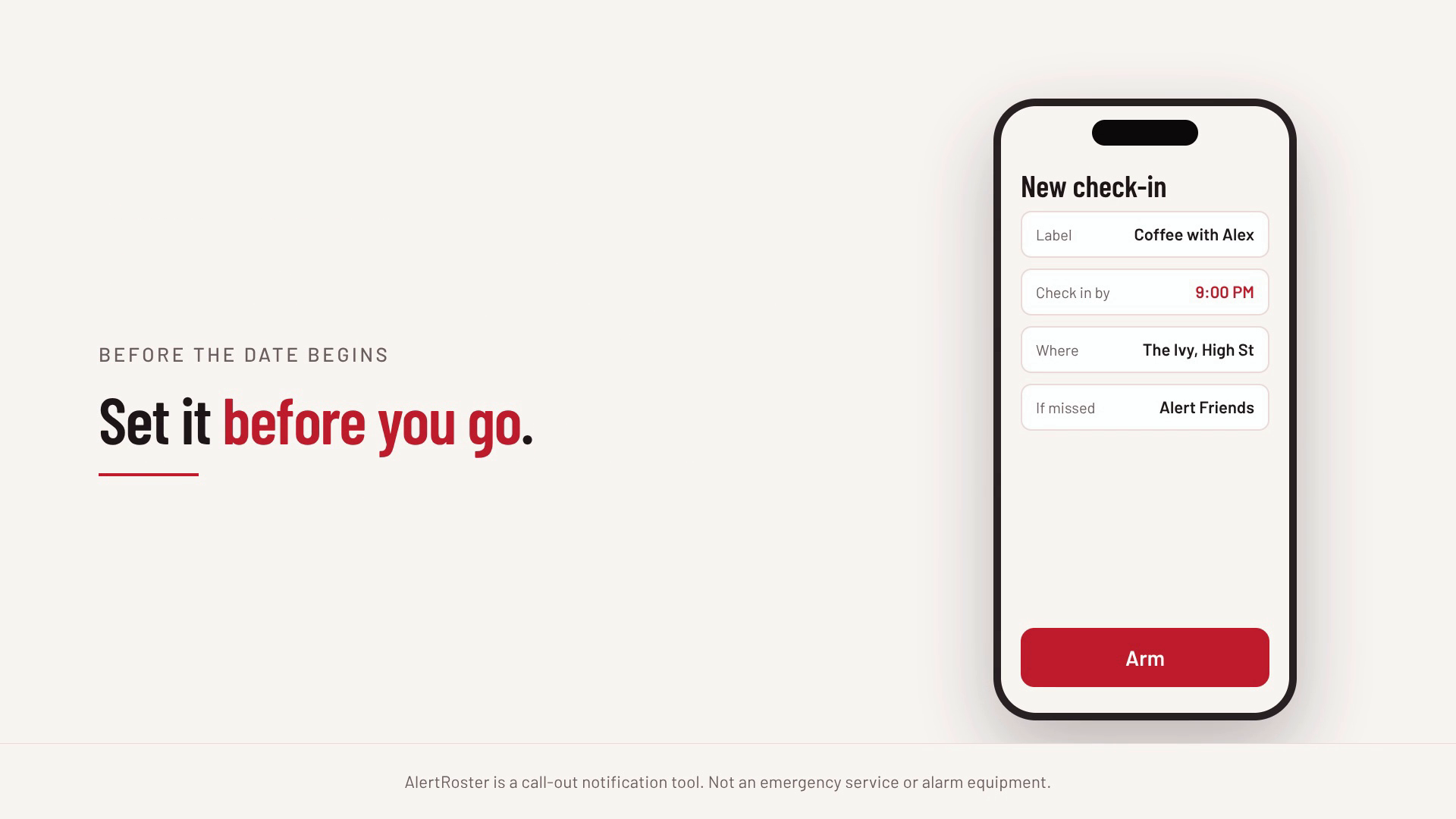
Armed before leaving: the venue, the window, the contact.
Set it before you go
Arm the check-in before you leave: where you’re going, roughly when you expect to be done, and who should hear about it if you aren’t.
Then put the phone away. Nothing is broadcast, nothing is shared, and nobody is watching a map for the next three hours.
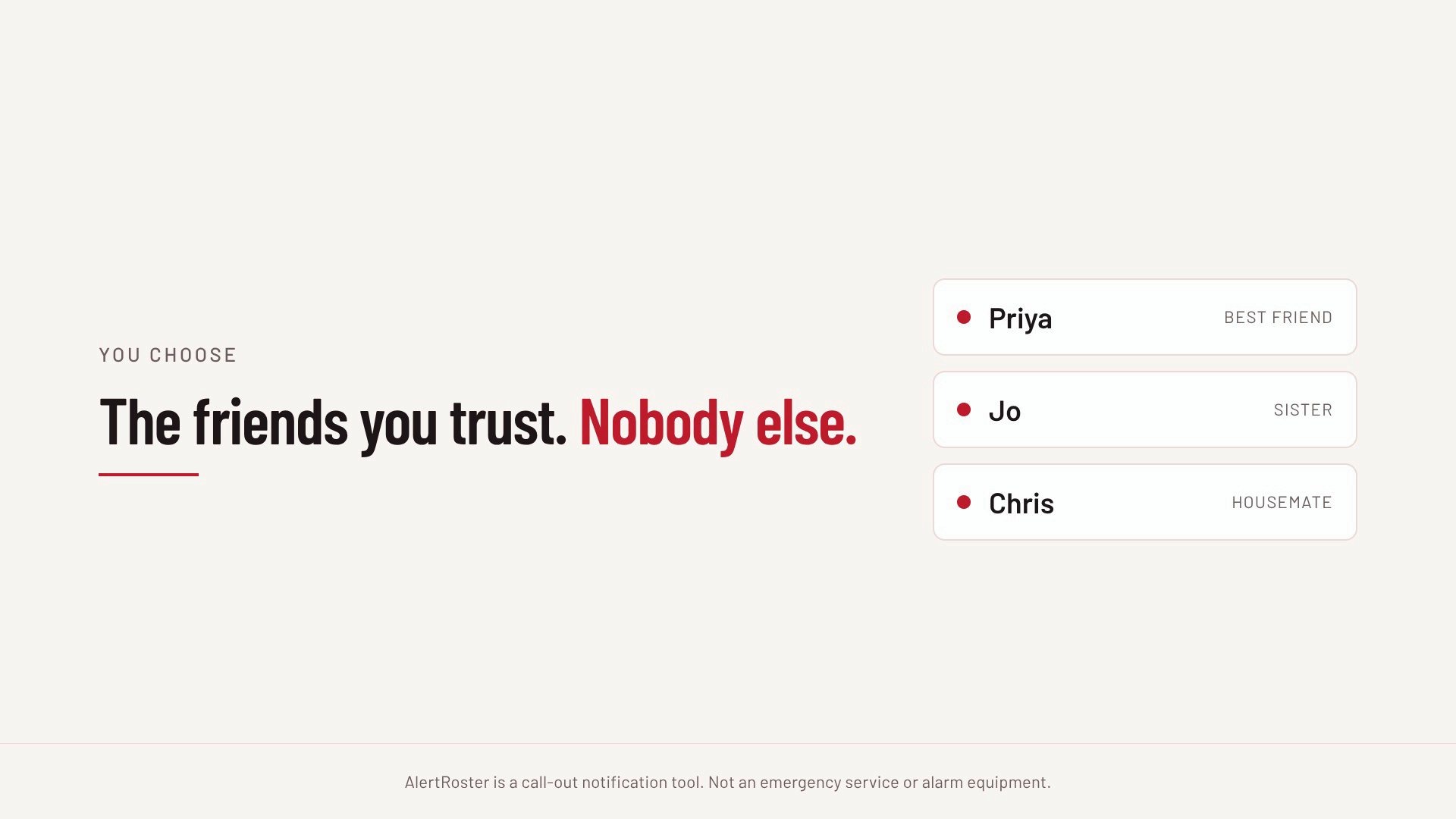
Going well? Extend, and nothing else happens.
The evening runs long…good
If it’s going well, extend it. One tap, no explanation, no notification to anyone.
This is the case the system is built around, because it is the case that actually happens.
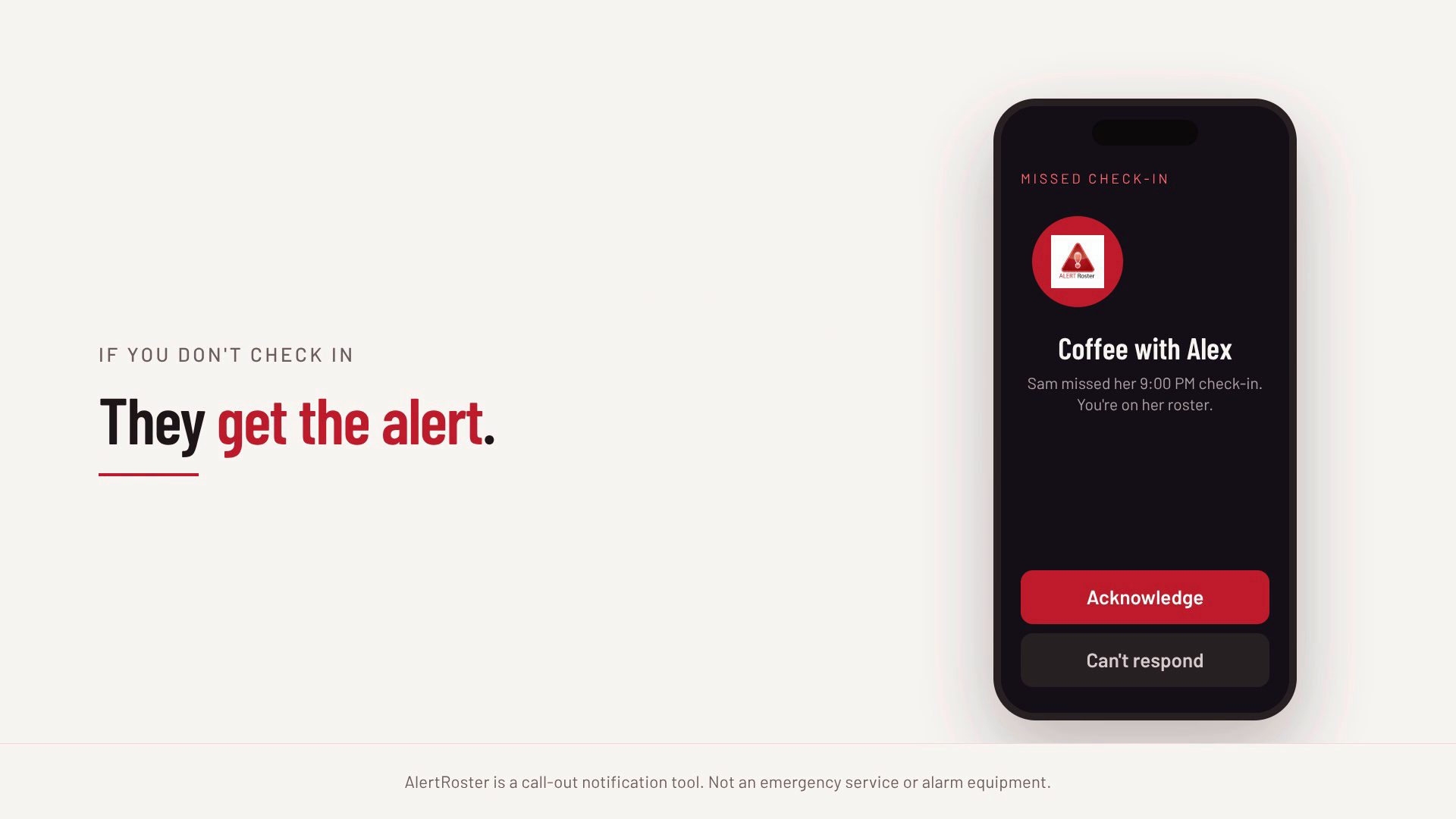
Missed: the contact is told, with the detail set in advance.
And if it doesn’t
Miss the check-in and the person you chose is told, with the detail you set when you armed it.
That is the whole of it. The value sits in one person knowing the plan, and knowing it without you having to remember to tell them in the moment.
A one-name alert roster
An alert roster is the ordered list of people a missed check-in reaches. For a first date it is usually one name, and one is the right number.
A single trusted person who knows the plan can act on it immediately. A longer roster spreads the same information across people who will each assume somebody else is handling it.
Where the term alert roster comes from.
Try it
AlertRoster is at alertroster.com. Setting up a check-in takes about a minute.
AlertRoster is a call-out notification and escalation tool. It is not an emergency service and does not contact one on your behalf. It is not a fire alarm, a security alarm, or an alarm monitoring service, and it holds no life-safety certification. It should not be the only way a call-out can reach your people.
About the author
Jim Hankins is the founder and CEO of Cloud Bedrock, LLC and the developer of AlertRoster, which he first launched in 2009. A US Army combat veteran and a 42-year veteran of IT and software development, he has spent much of his career building emergency communications platforms including as CTO of GEOS, the international emergency response coordination service acquired by Garmin in January 2021, and two successful exits. He has also volunteered in search and rescue, supporting the search for missing children.